

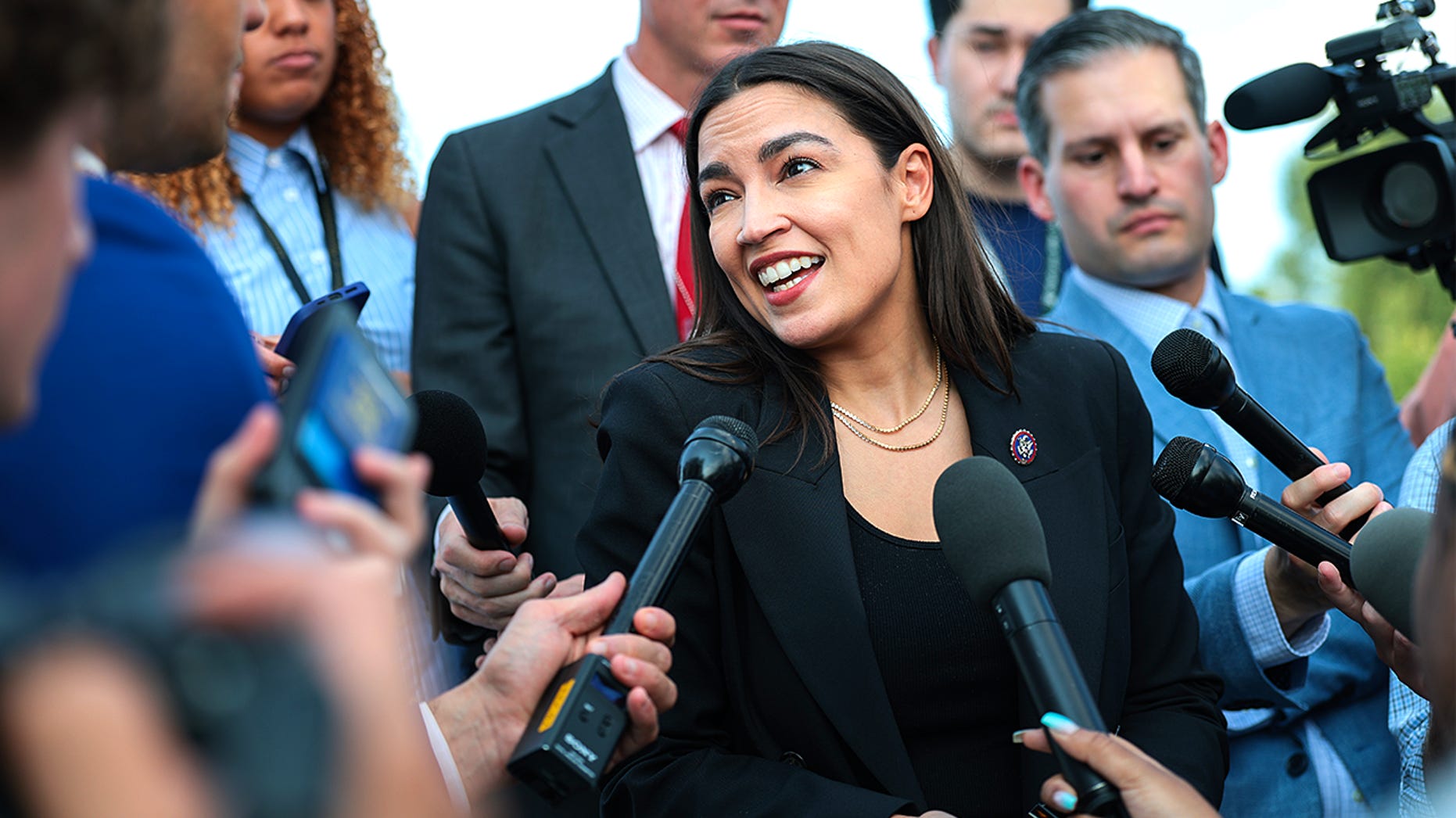
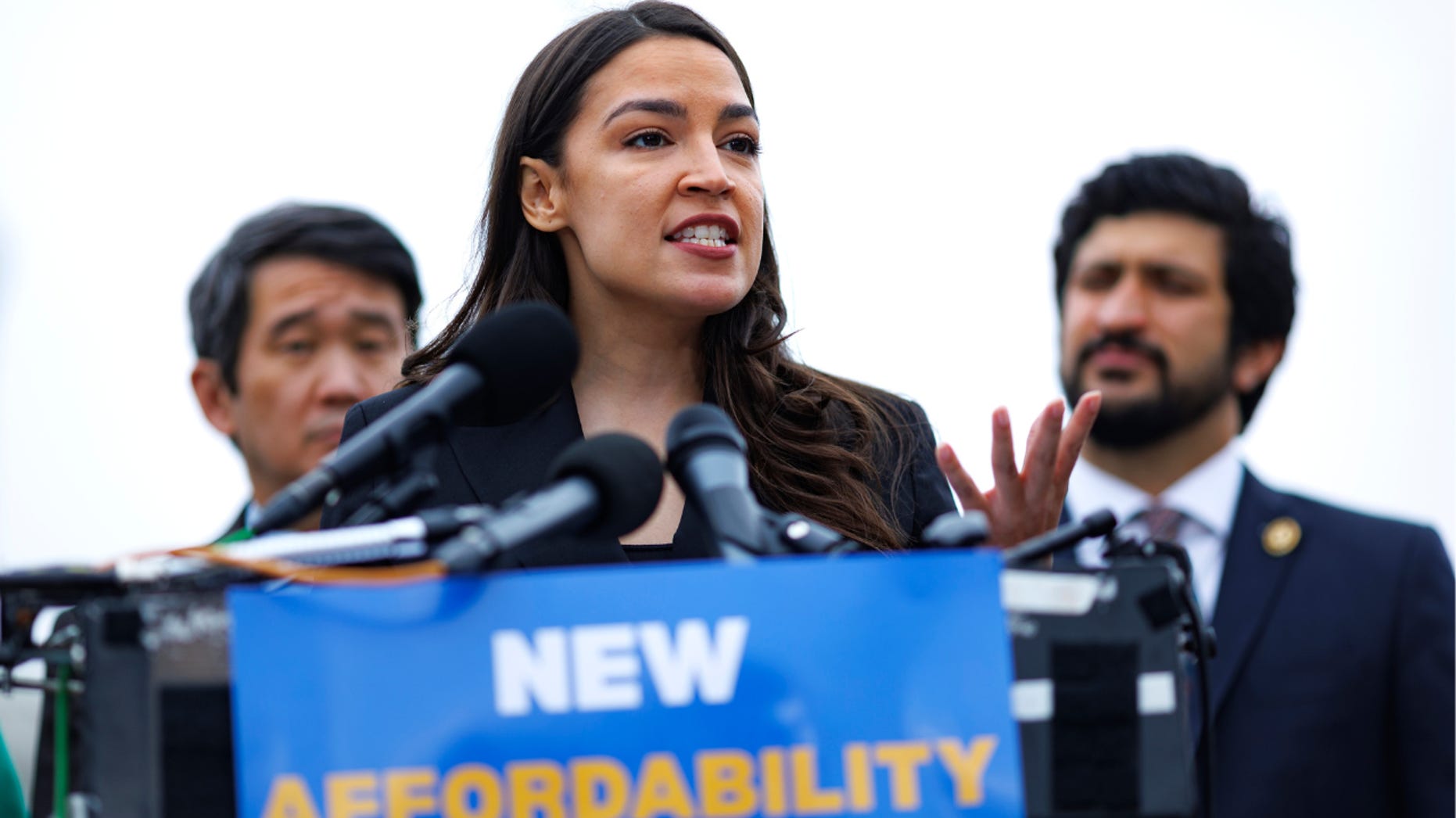
photo: Rep. Alexandria Ocasio-Cortez, D-N.Y., speaks to reporters near the House steps following a series of votes at the U.S. Capitol on July 22nd 2026 in Washington, D.C. [credit, Anna Moneymaker]
Alexandria Ocasio-Cortez as a Realistic 2028 Democratic Nominee
Recent polling and political commentary suggest that Alexandria Ocasio-Cortez (AOC) is emerging as a credible contender for the Democratic presidential nomination in 2028.
Polling evidence
A University of New Hampshire Granite State Poll in July 2026 found AOC leading the Democratic field in New Hampshire — a key early-battleground state — with 22% support among likely Democratic primary voters, ahead of Pete Buttigieg (1 point behind) and former Vice President Kamala Harris (17 points behind). [Fox News+1] This was a significant gain of seven points since February, indicating a surge in her appeal among progressive and younger voters. A Zogby Strategies national poll also showed a generic democratic socialist candidate leading a generic MAGA candidate 45% to 33%. [The Guardian]
Political momentum
AOC’s national tour and advocacy for progressive policies — including economic justice and universal healthcare — have resonated with voters frustrated with the Democratic establishment. [The Guardian] She has nearly 10 million Instagram followers and strong backing from the Democratic Socialists of America, as well as endorsements from figures like Nancy Pelosi. [The Guardian] Analysts note that her ability to mobilize supporters around key issues could make her a strong candidate if she decides to run. [Fox News]
Speculation and pundit views
Fox News and other commentators have highlighted her polling lead and political influence, framing her as a potential “rebuke” to Donald Trump and his MAGA movement. The Guardian+1. While she has not officially committed to a 2028 run, she has said her goal is “to change the country” and has toyed with both a presidential and Senate bid. [Fox News]
On Fox News, conservative radio host Buck Sexton predicted that AOC could very well top the Democratic ticket in 2028. He highlighted that she has been strategically softening her more radical progressive rhetoric for public consumption, comparing her strategy to how Barack Obama navigated his early national political career.
video: August 24th 2026
Context for 2028
With the party facing a term-limited Trump in 2028, and a growing progressive base energized by recent wins in mayoral and congressional races, AOC’s profile and polling strength position her as a realistic possibility for the nomination — especially if she chooses to run and can secure the support of key party leaders. [The Guardian+1]
In short, polls, endorsements, and political trends all point to AOC as a plausible and increasingly serious candidate for the 2028 Democratic nomination, though she has not yet made a formal announcement.
This has prompted me to consider the plausible possibilities, especially as we consider the ever shifting and changing demographic dynamics currently creating many new factors, mainly driven and advocated by the Democrat Party Marxist-Maoist communists and Muslims, as all America witnesses a massive new number of those within the 18 to 36 years old population willingly and even enthusiastically accept communism as a viable and preferable alternative to capitalism today. Let’s take a look at the possibilities an AOC presidency might hold for America, in the piece that follows, which I wrote today, after hearing Fox News this morning suggesting that AOC could quite possibly secure the nomination.
***************************************
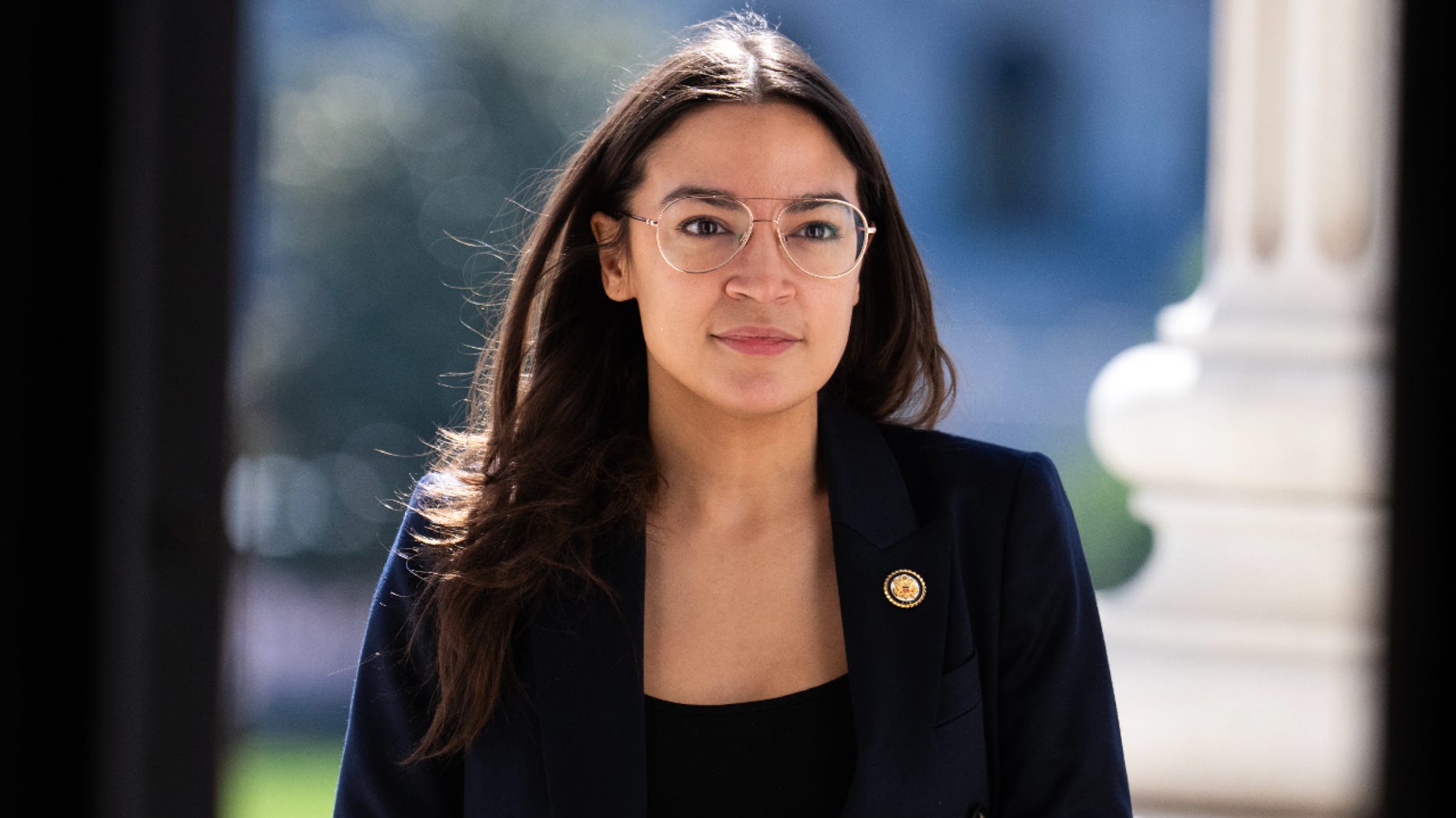
photo: Rep. Alexandria Ocasio-Cortez, D-N.Y., arrives to the U.S. Capitol for the last votes of the week on May 15th 2026. [credit, Tom Williams/CQ-Roll Call, Inc]
In the humid twilight of late summer 2032, the marble of the White House still gleamed under the floodlights, but the light itself felt thinner, as if the nation’s oxygen had been rationed along with everything else. Alexandria Ocasio-Cortez, once the insurgent congresswoman from the Bronx whose Instagram livestreams and Green New Deal slideshows had electrified a generation of the disillusioned and the young, now occupied the Oval Office at the close of her first term. The wave of naive optimism that had carried her there in 2028 had long since broken against the rocks of consequence. What remained was the wreckage, and the stubborn arithmetic of power that suggested she might yet win a second term. This is not prophecy. It is projection: a fusion of observable trends, institutional mechanics, and the hard logic of incentives, rendered in the spirit of those who have written of collectivist collapse and the individual’s lonely stand against it.
The path began, as such paths often do, with exhaustion and overreach. After years of institutional distrust, economic dislocation accelerated by automation and offshoring, and a cultural atmosphere thick with grievance, the Democratic Party in 2028 achieved what its most ambitious strategists had long desired: unified control of the presidency, the House, and the Senate. The margins were not landslide in the classical sense, but they were sufficient. Turnout among younger voters, urban professionals, and newly naturalized citizens proved decisive in key states. The Republican opposition, fractured by internal disputes over foreign policy, trade, and cultural signaling, failed to present a coherent alternative that could hold the center. Independents, weary of prolonged conflict in the Middle East and the persistent high cost of living, peeled away in numbers that proved fatal in the Electoral College.
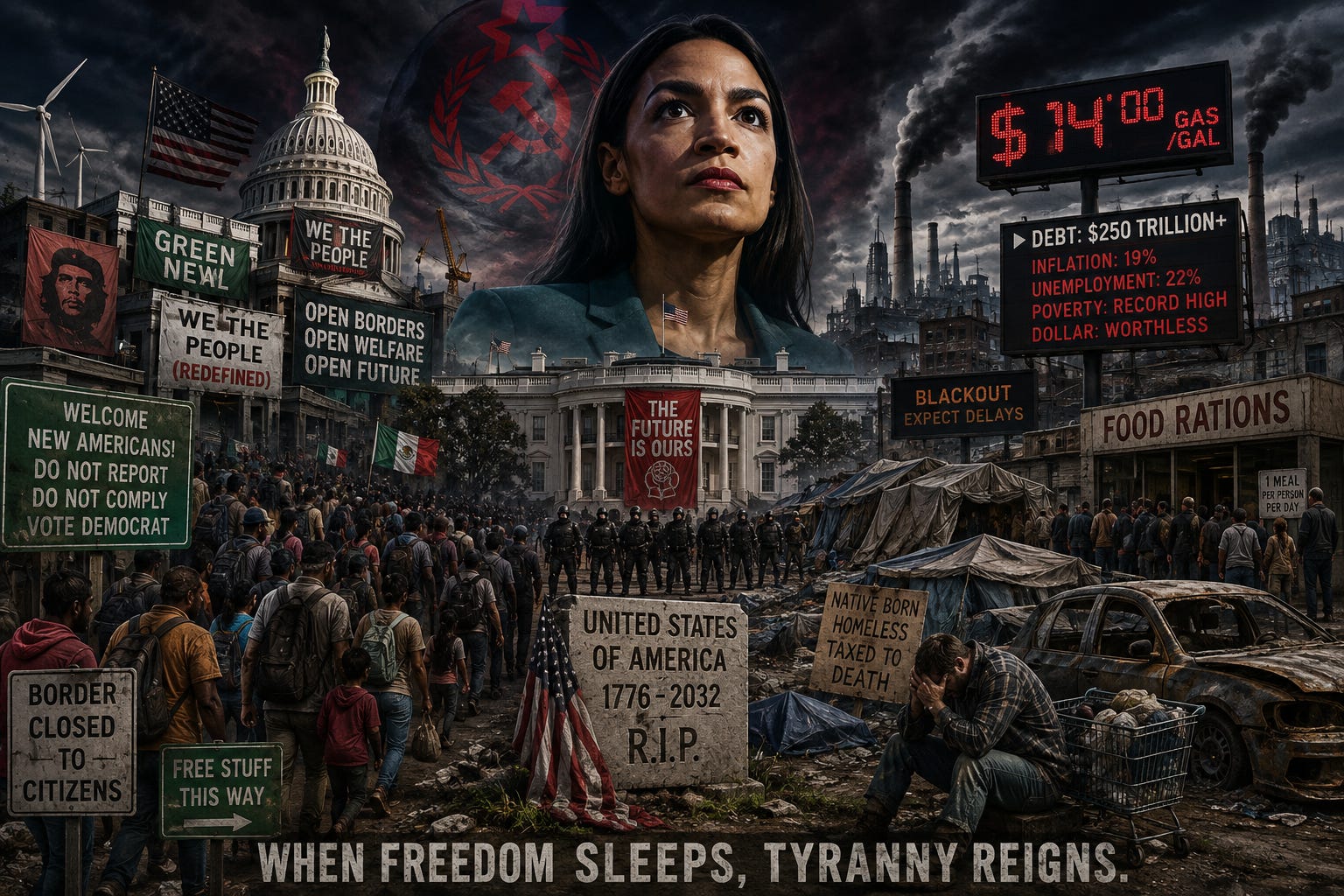
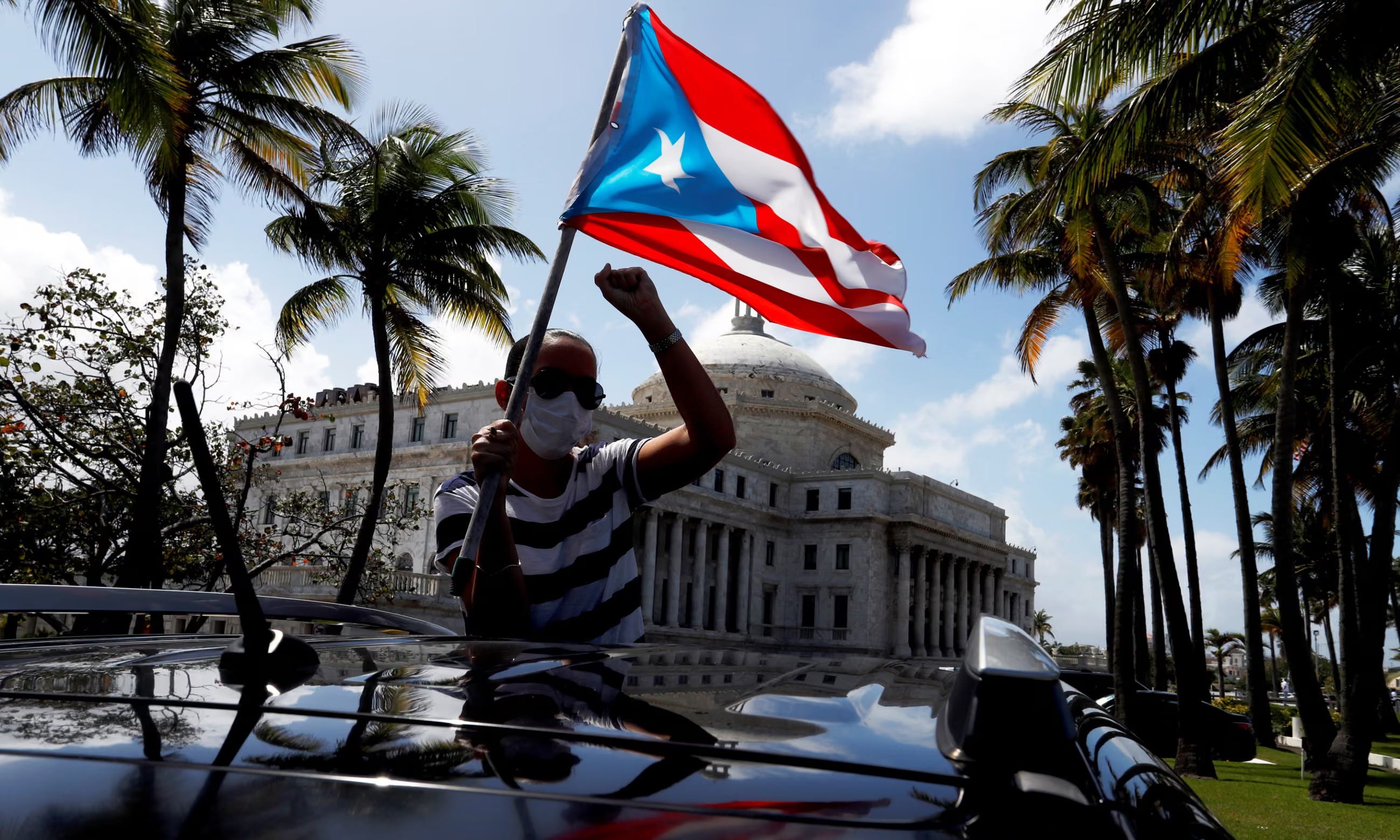
Once in office, the new administration and its congressional majorities moved with deliberate speed. The first institutional stroke was the elimination of the Senate filibuster for most legislation. Defenders called it democratization; critics called it the political equivalent of a nuclear first strike against the minority’s remaining leverage. With a simple majority now sufficient, the coalition advanced two structural changes that altered the map of power itself. Washington, D.C., and Puerto Rico were admitted as states. Four new Senate seats, reliably Democratic in the foreseeable future, and additional House seats followed. The Supreme Court, whose composition had already shifted with the retirement of its last consistent originalist, was expanded from nine to fifteen justices. Precedent existed for changes in the Court’s size; the Constitution is silent on a fixed number. Seven new appointments, drawn from the progressive legal academy and activist bar, quickly produced a working majority that viewed the Constitution less as a constraint than as a set of aspirations to be updated.

Immigration policy underwent simultaneous transformation. Immigration and Customs Enforcement was abolished in the opening months. Enforcement capacity collapsed. Over the ensuing years, net inflows — legal, illegal, and quasi-legal through expanded parole, refugee, and asylum channels — added tens of millions. Estimates circulating in 2032 placed the cumulative post-2028 increase at roughly twenty-seven million from Latin America, several million additional visa workers, and several million more from Africa and the Middle East under broadened humanitarian categories. Green cards became available after one year of presence regardless of entry status; citizenship and voting rights followed after two. The electoral mathematics were straightforward. Millions of new voters entered the rolls in time for subsequent cycles.
Labor markets in construction, agriculture, service, and lower-skill manufacturing absorbed the supply shock. Real wages for native-born workers without college degrees stagnated or declined in many metropolitan areas. Housing costs in gateway cities and secondary markets rose as demand outstripped constrained supply. Local governments in high-inflow jurisdictions faced intensified pressure on schools, emergency rooms, and welfare systems already strained by prior commitments.
Economic policy followed the logic of redistribution and industrial direction. A wealth tax of ten percent annually on net worth above one million dollars was enacted. Family businesses, farms, and closely held enterprises faced liquidity crises; many sold assets at depressed prices or relocated capital and talent abroad. The federal deficit climbed past seven trillion dollars annually as spending on expanded entitlements, industrial subsidies, and climate programs accelerated. Stagflation, which had begun to appear by 2029, hardened. Official unemployment, even after methodological adjustments that excluded certain discouraged workers and reclassified others, reached the low twenties. Inflation ran near nineteen percent. Gasoline approached fourteen dollars a gallon where available; diesel was higher still. A third of domestic refining capacity had been shuttered under tightened environmental rules and permitting delays. Blackouts became routine in major cities as the grid, already stressed by data-center demand and the phase-out of reliable baseload generation, failed to keep pace. Copper theft from infrastructure became a cottage industry as prices soared.
The Green New Deal apparatus, rebranded and expanded, directed hundreds of billions toward high-speed rail corridors that remained incomplete, electric-vehicle mandates that outran charging infrastructure and mineral supply chains, and intermittent generation whose capacity factors disappointed. Much of the capital was absorbed by politically connected intermediaries. Universal Basic Income, set near forty thousand dollars for households below a ninety-five-thousand-dollar threshold, was introduced with fanfare.
Early celebration gave way to measurable declines in labor-force participation among certain cohorts. Tent encampments expanded. Overdose deaths, already elevated, climbed further as the combination of cash transfers, reduced employment attachment, and porous borders facilitated supply. Diversity, equity, and inclusion mandates, reversed under the prior administration, returned with statutory force. Corporate boards and executive suites faced numerical targets and private rights of action for noncompliance. Universal healthcare, implemented in 2030, produced multi-month waits for specialists and diagnostic imaging in many regions; fraud against the new single-payer-adjacent system proliferated.
Censorship infrastructure, partially dismantled after 2024, was rebuilt through a combination of platform liability threats, federal advertising leverage, and informal coordination with civil-society organizations. Dissent on immigration numbers, crime statistics, or the efficacy of industrial policy was frequently labeled misinformation and de-amplified. The cultural atmosphere thickened with official narratives of equity and climate emergency; private institutions adjusted accordingly to retain federal contracts and regulatory favor.
By the summer of 2032 these policies had produced a measurable deterioration in living standards for broad segments of the population, particularly those outside the professional-managerial and public-sector classes. Yet the same policies had also altered the electorate. Naturalized citizens and their immediate descendants, concentrated in high-turnout urban and suburban districts, formed a durable voting bloc inclined toward the party that had facilitated their entry and provided the transfer payments. AOC’s re-election prospects remained viable precisely because the demographic and institutional changes she had midwifed were self-reinforcing. The permanent majority that “progressive” communist strategists had long discussed in academic papers and donor briefings had moved from theory toward practice.
The deeper consequences, however, were not merely fiscal or electoral. They were civilizational in the sense that Ayn Rand’s fiction once dramatized: the progressive erosion of the link between effort and reward, the substitution of political allocation for price signals, and the moral inversion that treated productive capacity as a collective resource to be liquidated rather than an individual achievement to be protected. John Ringo’s future histories, with their emphasis on the sudden collapse of complex systems under cascading failures of competence and will, supply the complementary register. When the institutions that maintain order — border control, energy reliability, judicial restraint, fiscal solvency — are simultaneously weakened, the margin for error shrinks. Small shocks become systemic. The American experiment had always depended on a rough equilibrium among ordered liberty, limited government, and a culture that prized self-reliance over clientelism. That equilibrium was deliberately disturbed.
Critics of this trajectory had warned that open borders combined with expansive welfare would undercut the wage structure of the working class while expanding the dependent class; that court packing and filibuster elimination would remove the last institutional speed bumps against majoritarian excess; that wealth taxes and industrial planning would accelerate capital flight and innovation stagnation; that energy scarcity would raise the real cost of every downstream good. By 2032 those warnings read less like ideology and more like accounting. The official narrative continued to attribute hardship to the lingering effects of prior administrations, corporate greed, or insufficient ambition in the green transition. The lived experience of rising prices, unreliable power, longer medical waits, and visible disorder in once-stable communities told a different story.
Yet power, once consolidated, is not easily relinquished. The same coalition that had rewritten the rules of Senate procedure, statehood, and judicial composition retained the ability to define the terms of public debate and to mobilize newly enfranchised voters. Second-term plans circulating in progressive policy shops contemplated further expansions of public employment, tighter controls on residual private capital, and additional immigration increments framed as moral imperatives. The logic was consistent: every new arrival who received benefits and eventual citizenship strengthened the electoral coalition; every regulatory ratchet that raised the cost of energy or labor further concentrated economic activity in sectors dependent on political favor.
Outside the formal political system, the response was uneven. In certain rural and exurban counties, informal networks of mutual aid, local law enforcement cooperation, and quiet noncompliance with federal directives thickened. In major cities the opposite occurred: reliance on federal transfers increased, and political machines adapted to the new clientele. Interstate migration accelerated as households with portable skills and capital sought jurisdictions still capable of maintaining basic order and reliable infrastructure. The result was a soft sorting of the population along lines of competence, culture, and risk tolerance — an outcome neither the administration nor its critics had fully intended, but one that followed from the incentives they had created.
By the close of the first term the country remained formally intact. Elections still occurred. Courts still issued opinions. Markets, though distorted, still cleared at some price. Yet the underlying compact — the shared expectation that the federal government would protect borders, maintain sound money, and refrain from using the tax code as an instrument of class liquidation — had frayed. When that compact frays far enough, the question shifts from policy debate to legitimacy. History offers no guarantee that the shift will be peaceful or reversible within a single generation.
The speculative endpoint sketched in certain corners of the discourse — civil fracture, the repudiation of the prior regime, and the reconstitution of authority under a narrower cultural and demographic majority — remains outside the realm of confident prediction. What can be said with greater confidence is that the institutional and economic trajectory described above is not imaginary. It is an extrapolation of proposals already advanced, majorities already sought, and demographic trends already measurable. The elimination of the filibuster, the admission of new states, the expansion of the Court, the abolition of interior enforcement, the wealth tax, the industrial subsidies, and the rapid pathway to citizenship are all ideas that have circulated openly among Marxist-Maoist Democrat Party and RINO/globalist regressive elected officials, academics, and advocacy organizations. Their simultaneous enactment under unified government is a contingency, not a fantasy. The downstream effects on wages, prices, energy, capital formation, and social cohesion follow from elementary economics and observed behavior under similar policies elsewhere.
Whether such a trajectory culminates in reversible decline or in irreversible fracture depends on variables that remain underdetermined: the resilience of residual private institutions, the adaptive capacity of state and local governments, the willingness of the professional classes to absorb the costs they have imposed on others, and the speed with which productive talent exits or disengages. What is not underdetermined is the direction of the incentives. When political power is used to rewrite the rules of citizenship, adjudication, and property in favor of a permanent coalition, the losers of that rewrite do not disappear. They recalculate. Some leave. Some comply. Some organize. The precise form of the recalculation is the province of novelists and historians of the future. The fact of the recalculation is the province of anyone who studies the record of centralized experiments that treated human capital and national borders as infinitely elastic.
In the summer of 2032 the President still spoke of equity, of climate justice, of the moral necessity of openness. The numbers on inflation, unemployment, and net fiscal position told a colder story. The blackouts, the tent cities, the emptied small-business corridors, and the quiet departure of capital and talent told another. The electoral map, redrawn by statehood and rapid naturalization, suggested that the story might continue for at least one more term. Whether the Republic could absorb another four years of the same medicine without permanent alteration of its character was the question that hung in the thick air of that August. The answer, when it came, would not be delivered in a single election night. It would be written in the slower language of institutions, incentives, and the hard limits of complex systems under sustained stress.
The lesson for those who still value the original American proposition is uncomplicated and severe. Institutional guardrails exist for reasons that become obvious only after they are removed. Demographic change is not destiny, but policy that treats citizenship as a rapid entitlement and enforcement as optional will produce electoral consequences that compound. Economic policy that prioritizes redistribution and industrial direction over price signals and capital formation will, over time, reduce the surplus available for redistribution. Energy policy that subordinates reliability to ideology will raise the real cost of every other good. Cultural policy that subordinates competence to demographic representation will degrade the performance of the institutions that underwrite prosperity and order. None of these outcomes requires conspiracy. They require only the consistent application of the premises already on offer.
A republic that forgets these constraints does not remain a republic in the sense its founders understood. It becomes something else — something more centralized, more clientelist, more brittle. The speculative chronicle of an AOC presidency is useful not because every detail will occur exactly as projected, but because the underlying mechanics are already visible. The wave of optimism that elevates a figure associated with the most ambitious version of “progressive” Marxist-Maoist transformation is possible. The institutional moves that lock in that transformation are possible. The economic and social consequences that follow are not only possible but, under those conditions, probable. Whether the nation recovers quickly, slowly, or not at all depends on choices still available. The cost of failing to make them is measured in the difference between a country that can still correct course and one that has rewritten the rules so thoroughly that correction itself becomes the revolutionary act.
The final accounting, if it comes, will not be written by the architects of the experiment. It will be written by those who inherit the results—by the families who watched real wages stagnate while housing costs climbed, by the entrepreneurs who sold under duress or left, by the communities that lost the ability to keep the lights on and the streets passable, and by the voters who discovered, too late, that the franchise had been expanded faster than the productive base that sustains it. In that accounting the naive optimism of 2028 will appear as the last moment when the outcome was still reversible at acceptable cost. After that, the ledger filled with entries that could not be erased by another election alone.
And any revolution that might could have been conducted by way of peaceful measures and mechanisms, that had once existed under the nation’s original Constitution, will find itself having to resort to the idea set forth within our Declaration of Independence, suggesting whenever a government tramples upon our Inalienable God-given Rights, life, liberty and the pursuit of happiness, “... it is the Right of the People to alter or to abolish it, and to institute new Government, laying its foundation on such principles and organizing its powers in such form, as to them shall seem most likely to effect their Safety and Happiness.”
Thomas Jefferson, our third President further suggested that “The Tree of Liberty must be refreshed from time to time with the blood of patriots and tyrants”, every twenty years or so, in order that the people may live prosperous and free.
This is the projection. It is offered not as inevitability but as warning, grounded in the observable behavior of political coalitions, the measurable effects of similar policies in other jurisdictions, and the elementary logic of incentives. Those who dismiss it as mere fiction should examine the platforms, the legislative drafts, the academic papers, and the demographic data already in the public domain. The distance between those materials and the chronicle above is shorter than many prefer to believe. The distance between the chronicle and a future that still resembles the American founding is longer than many are prepared to travel. The choice of which distance to close remains, for the moment, open.
by Justin O Smith
And if you don't think they will open the immigration floodgates as quickly as possible to distort the 2030 Census, well, imagine blue states with their unearned Congressional districts made up primarily of noncitizens squeezing red states out of their rightful representation.
If she’s up against Buttigieg and Harris, AOC will walk it. I’m British but from what I can tell, no one likes Buttigieg no matter how much they keep pushing him, and we all know Harris has the charisma and intellect of a day old burrito.